

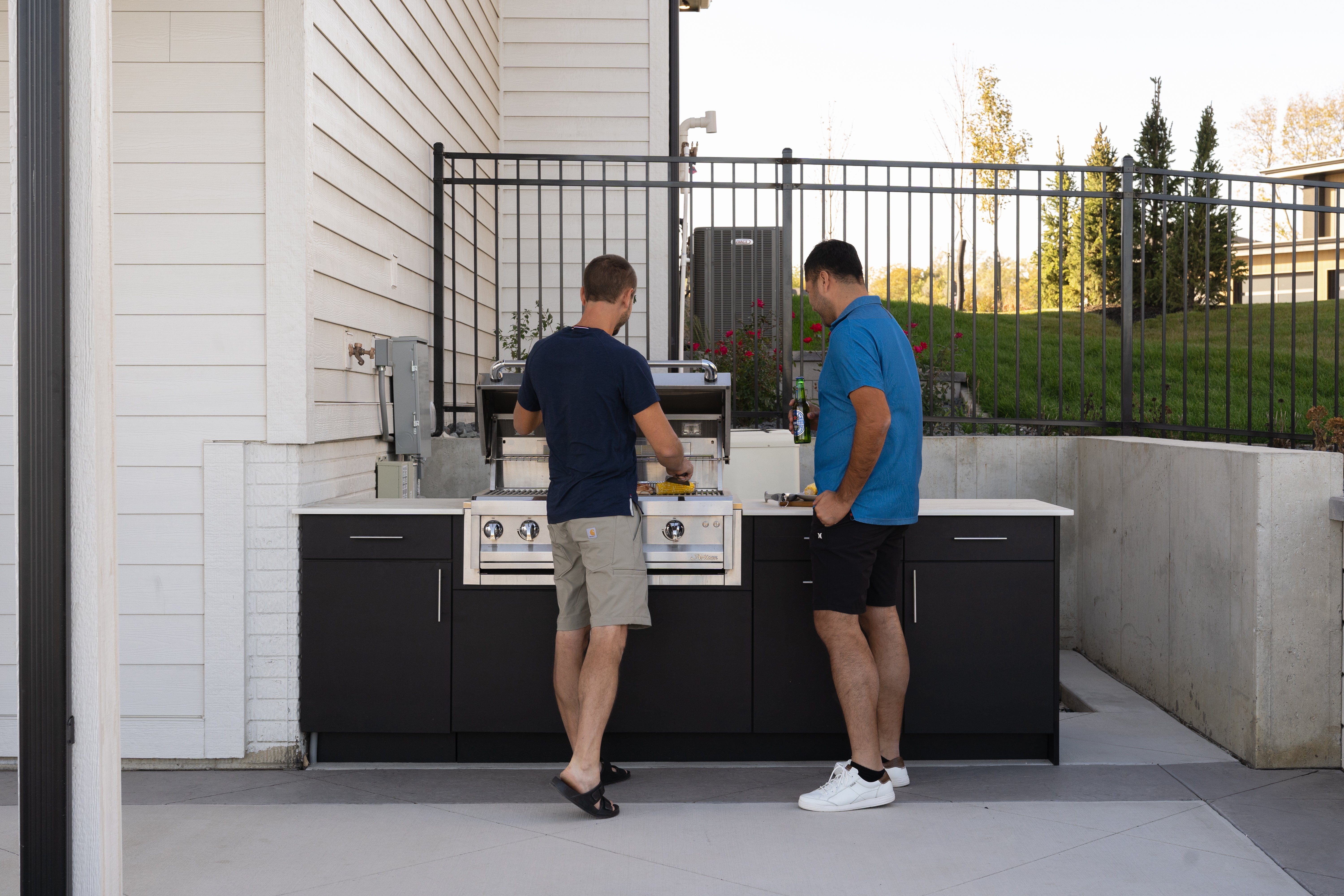
If you are planning an outdoor living space for a custom home, start with the features that shape how you will actually use it: indoor-outdoor flow, seating, shade, lighting, fire features, landscaping, and room for entertaining. The best outdoor spaces are not built around one luxury detail. They are built around comfort, function, and the way you want to live at home.
This guide covers the core elements to consider when designing an outdoor living space and explains how each one supports a more usable, more connected home environment.
Quick answer: what should an outdoor living space include?
- A strong connection between indoor and outdoor areas
- Comfortable seating arranged for conversation and daily use
- Shade or screening that makes the space usable longer
- Lighting for evening visibility and atmosphere
- A fire feature for gathering and seasonal flexibility
- Landscaping that adds privacy, texture, and setting
- Optional entertainment features based on how you host
Start with how you want to use the space
Before selecting materials or features, define what the space needs to do. Some homeowners want a place for quiet evenings. Others want an area that supports weekend hosting, family dinners, or a flexible extension of the main living area.
That decision shapes the layout. An outdoor living space works better when the plan follows your routines instead of treating the backyard as a separate design exercise.
1. Create a strong indoor-outdoor connection
One of the most practical starting points is the transition from the home to the outdoor area. Large openings to a patio, deck, or covered porch can help the outdoor space feel connected to the kitchen, dining area, or main living room.
This connection supports both everyday use and entertaining. It can also improve natural light and make the outdoor space feel like a true extension of the home rather than an add-on used only a few times each year.
A screened-in porch can add another layer of function by giving you fresh air and protection from insects and debris.
2. Plan seating around conversation and comfort
Seating should follow the way you gather. Sectionals, lounge chairs, dining sets, and flexible seating arrangements can all work well, but the right choice depends on whether the space is meant for meals, conversation, or a mix of both.
Comfort matters as much as appearance. Durable outdoor materials, weather-resistant fabrics, and furniture sized to the footprint of the space can help the area feel inviting without becoming crowded.
3. Add a fire feature for longer seasonal use
A fire pit or outdoor fireplace often becomes the natural focal point of the space. It gives people a place to gather and helps extend the usefulness of the area into cooler evenings.
Whether you prefer a gas fire feature or a wood-burning option, the main design question is how it supports the layout. The fire feature should feel integrated with the seating plan, not dropped into the yard as a standalone accent.
4. Use lighting to make the space functional after dark
Outdoor lighting should support both visibility and atmosphere. Path lighting, overhead lighting, lantern-style fixtures, and accent lighting can all play a role depending on the layout and the architectural style of the home.
Good lighting helps the space stay useful after sunset while also highlighting landscaping, entry points, and gathering areas. The goal is not brightness everywhere. The goal is a layered approach that makes the space feel usable and well considered.
5. Use landscaping to shape privacy and setting
Landscaping does more than improve appearance. It can frame views, define edges, soften transitions, and create privacy around dining or seating areas.
Plant selections, planters, shrubs, and trees should work with the scale of the home and the way the outdoor space is used. A well-designed landscape can make the outdoor area feel calmer, more finished, and more connected to the rest of the property.
6. Include entertainment features only if they match your routines
Outdoor speakers, projection areas, play zones, and recreation features can all make sense when they reflect how you already spend time at home. These features work best when they support the main purpose of the space rather than competing with it.
If the goal is frequent hosting, an outdoor entertainment setup may be worth planning early. If the goal is a quieter retreat, simpler choices may create a stronger result.
How do you make an outdoor living space feel cohesive with the rest of the home?
The strongest outdoor spaces feel connected to the home in both layout and material language. That does not mean everything has to match exactly. It means the transition, finishes, proportions, and furniture choices should feel consistent with the architecture and the way the interior functions.
When that connection is clear, the outdoor area feels intentional and easier to use throughout the year.
What makes this important in a custom home?
In a custom home, the outdoor living space can be planned as part of the full design rather than treated as a later addition. That gives you more room to think through circulation, views, covered areas, furniture zones, lighting, and how the backyard connects to the rooms you use most.
Embarq Signature Homes approaches custom home design with that broader perspective in mind. The goal is to create a home that reflects how you live inside and outside.
Plan the outdoor space as part of the home
An outdoor living space works best when it is planned around the way you gather, relax, and move through the home. The right combination of flow, comfort, lighting, and landscape design can make the space more useful from the start.
Learn more about building with Embarq Signature Homes or Learn more about building with Embarq Signature Homes to talk through how your outdoor living spaces can support the way you want to live.
Latest from the Blog
Explore expert insights on building a luxury custom home in the Des Moines area. Browse resources on custom design, financing, premium home features, lot selection, neighborhoods, and the Embarq building experience.
.jpg?length=360&name=MLS_Web_Version-Embarq_HomeShow_2800%20Wakonda_MLS_September%202026%20(186).jpg)